The Published Record
Peer-reviewed. Archived. Verifiable.
Every claim Rife Systems makes is traceable to primary-source documentation. These are not obscure references — they are the published scientific record of Dr. Rife's work and the modern peer-reviewed research that has independently studied the underlying mechanisms.
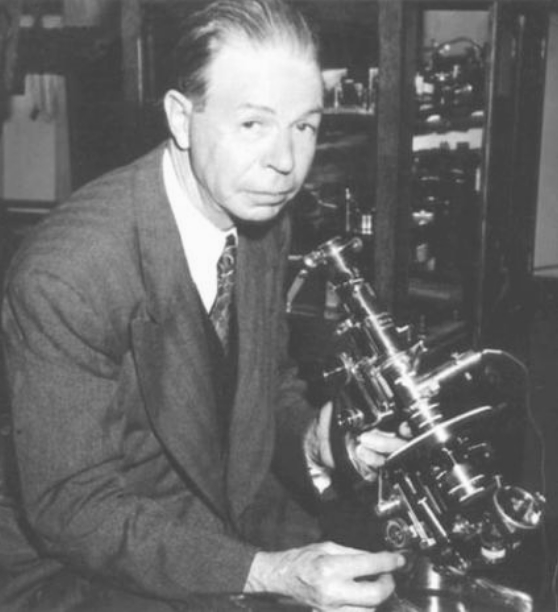
The instrument, with which the reported results have been obtained, is a universal microscope of high resolving power. Present-day microscopy is thus greatly extended, and it becomes possible for the first time in history to demonstrate visually the existence of the filtrable viruses.Smithsonian Institution · Annual Report of the Board of Regents "The New Microscopes" · R. E. Seidel, M.D. & M. Elizabeth Winter · 1944 · pages 193–219
Tumor-specific modulation frequencies regulate the expression of genes involved in migration and invasion and disrupt the mitotic spindle — demonstrating the ability of tumor-specific frequencies to block growth of tumor cells in a tissue- and tumor-specific fashion in vitro.Chinese Journal of Cancer · Peer-reviewed mechanism of action Zimmerman et al. · "Targeted treatment of cancer with radiofrequency electromagnetic fields amplitude-modulated at tumor-specific frequencies" · 2013
Through the simultaneous availability of the Rife microscope, an instrument combining very high magnification with coördinated resolving power, and a simple procedure for inducing the filterable state in bacteria at will, the possibility of actually demonstrating organisms in this hitherto illusive condition very obviously presented itself.California and Western Medicine · Peer-reviewed medical journal A. I. Kendall, Ph.D. (Northwestern University Medical School) & R. R. Rife, Ph.D. · "Observations on Bacillus Typhosus in Its Filterable State" · Vol XXXV · December 1931 · pages 409–411
The photographs that were published in the 1944 Smithsonian Report are indisputably beyond the capability of any resolution that was available at that time, and they have been confirmed by electron microscope since then. This has resolution down in the neighborhood of about 20 angstroms, at least, and nobody had ever been able to do that.John Hubbard, M.D. · Associate Professor of Pathology State University of New York, Buffalo · Verification of Dr. Rife's published 1944 microscopy
The Rife microscope combines very high magnification with coördinated resolving power — making possible the direct observation of biological structures previously invisible to science.Journal of the Franklin Institute Vol 237 · "The New Microscopes" · R. E. Seidel, M.D. & M. Elizabeth Winter · February 1944 · pages 103–130
Observations with the Rife microscope of filter-passing forms of microorganisms — detailing the first direct visualization of previously-unobservable biological structures at magnifications then thought impossible.Science · The journal of the American Association for the Advancement of Science E. C. Rosenow, M.D. · Vol 76 · August 26, 1932 · pages 192–193
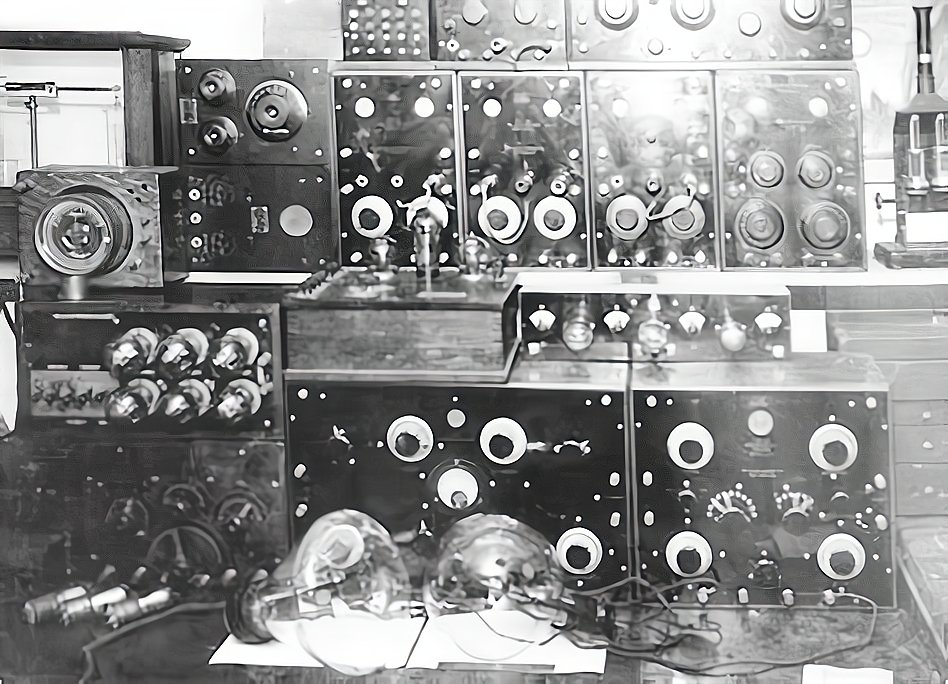
Rife Laboratory · No. 3 Ray Device with Accessories
Discover Our Instruments
Hand-built, individually calibrated, and specified from primary-source engineering documentation. Our product catalog and store launch with the full site rollout in the coming weeks.
Notify Me When Available Preview the store →